- Written by: SimbaHardik
- June 6, 2026
- Categories: Blog
- Tags:
Introduction
Imagine reaching your ideal customer at the exact moment they are asking a question about your product. No scrolling, no banner blindness, no wasted budget. That is exactly the promise behind ChatGPT ads, and the marketing world is paying very close attention right now.
If you have been following trends in digital advertising, you already know that OpenAI has been quietly building toward a monetization model. Now it is becoming real. For anyone serious about staying ahead, especially those exploring a digital marketing course in Surat, this is the moment to lean in and understand what is actually changing.
What Are ChatGPT Ads and How Do They Work?
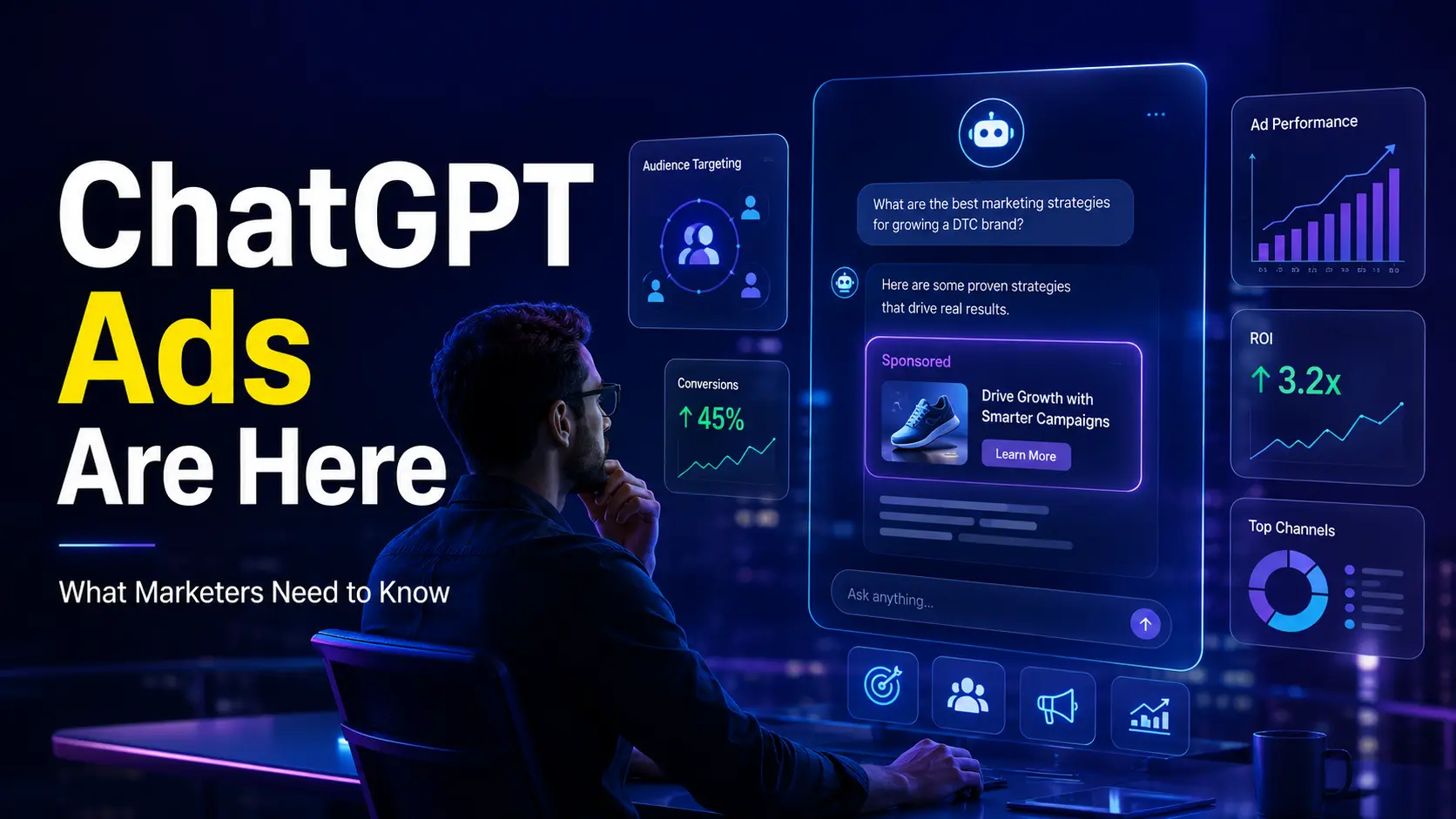
ChatGPT ads are sponsored placements or promoted responses that appear inside the ChatGPT interface when users ask relevant questions. Unlike traditional display ads that interrupt the user experience, these ads integrate directly into a conversation.
Think about it this way. A user types, “What is the best project management tool for a small team?” ChatGPT responds with helpful information, and somewhere in that response, a relevant product could appear as a sponsored recommendation.
This is not pop-up advertising. It is contextual, conversational, and deeply personalized. That combination makes ChatGPT ads fundamentally different from anything marketers have used before.
OpenAI has not released the full technical details yet, but early signals suggest the model will blend organic answers with promoted content in a way that feels natural rather than intrusive.
Why Marketers Should Take This Seriously Right Now
The numbers speak for themselves. ChatGPT crossed 100 million weekly active users faster than almost any product in history. That audience is engaged, curious, and actively seeking answers.
Traditional ad platforms like Google and Meta have trained users to scroll past ads. People install ad blockers. Click through rates on banner ads have dropped to fractions of a percent. ChatGPT ads, however, arrive inside an answer the user asked for. The intent is already there.
This is the kind of advertising moment that only comes around once in a generation. Marketers who adapt early will build an advantage that competitors will struggle to close later.
For anyone currently taking or considering a digital marketing course in Surat, this is exactly the type of real world shift that separates good marketers from great ones.
How ChatGPT Ads Differ From Google Ads and Meta Ads
Understanding the difference matters before you shift budget or strategy.
1. Google Ads target users based on keywords they search. The intent is clear, but competition is fierce and costs per click keep rising.
2. Meta Ads rely on behavioral targeting and interest graphs. They work well for awareness and retargeting, but privacy changes have weakened their precision over time.
3. ChatGPT ads operate differently. The user is in a dialogue. They are not just searching a keyword, they are expressing a full thought, a problem, a need. That context is richer than any keyword or interest category.
Brands that learn to write for conversational intent rather than keyword matching will perform significantly better in this new environment.
Skills Marketers Need to Succeed With ChatGPT Ads
The skill set required for conversational advertising is genuinely new. Here is what you need to develop right now.
• Conversational copywriting – Your ad copy must sound like a natural part of a conversation, not a sales pitch. Short, direct, and genuinely helpful language wins.
• Prompt-aware content strategy – Understanding how users phrase questions to AI tools helps you predict where your brand should show up and what tone to strike.
• AI literacy – You do not need to be an engineer, but understanding how large language models work gives you a strategic edge when briefing campaigns or evaluating results.
• Data interpretation – ChatGPT ad metrics will likely look different from traditional impressions and clicks. Marketers who can read new data formats will adapt faster.
• Ethical brand positioning – Users trust ChatGPT for honest answers. If your ads feel manipulative, the backlash will be swift. Authentic, value-driven messaging is not optional here.
Beginner Mistakes to Avoid When ChatGPT Ads Launch
New platforms always attract early mistakes. Here are the ones to sidestep from day one.
Treating ChatGPT ads like search ads is the most common trap. The format rewards helpfulness, not keyword density. Writing stiff, promotional copy will get ignored or flagged quickly.
Targeting too broadly is another issue. The power of conversational advertising comes from specificity. A vague audience means a vague response, and that wastes budget.
Ignoring the organic conversation around your ad placement is also a risk. If ChatGPT describes your product category in a certain way and your ad contradicts that framing, users will notice the disconnect immediately.
Skipping measurement planning is a mistake many brands make on new platforms. Set your baselines and KPIs before you spend a single rupee.
A Practical Roadmap for Marketers Getting Started
You do not need to wait for the full rollout to start preparing. Here is a realistic path forward.
Start by auditing how your brand appears in ChatGPT responses today. Ask questions your customers ask and see how your company or product category comes up. That gives you a baseline.
Next, study the language patterns your audience uses when querying AI. This is your first draft of conversational keyword research.
Then invest in learning. A structured digital marketing course in Surat that covers AI tools, content strategy, and performance marketing will give you the foundation to build on as ChatGPT ads mature.
Run small tests on existing platforms with conversational ad copy. Learn what tone and format works for your audience before you move budget to a brand new channel.
Finally, follow OpenAI announcements closely. The rules, formats, and pricing structures will evolve fast in the first twelve months.
Career Opportunities and Salary Growth in the AI Advertising Era
The rise of ChatGPT ads is creating new roles that did not exist two years ago. AI marketing strategists, conversational content specialists, and prompt-based campaign managers are already appearing in job listings globally.
In India, the demand for AI-savvy digital marketers is growing sharply. Entry level roles in digital marketing now start at around 3 to 4 lakhs per annum in most cities, and specialists with AI platform expertise can command 8 to 15 lakhs within a few years.
The skillset gap is real and wide right now. Those who build expertise early will fill senior positions as companies scramble to catch up with this shift.
If you are based in Gujarat and want to future-proof your career, enrolling in a digital marketing course in Surat with a strong AI and content marketing curriculum is one of the highest-return investments you can make today.
Real World Examples of What ChatGPT Ads Could Look Like
Picture a user asking ChatGPT which protein supplement is best for muscle recovery. In the response, after an honest breakdown of options, a sponsored mention of a well-regarded brand appears with a direct link and a brief value proposition. The user already has buying intent. The ad fits the moment perfectly.
Or consider a small business owner asking how to manage invoices more efficiently. ChatGPT explains a few approaches and includes a promoted mention of an accounting software with a free trial. Again, the context is relevant and the timing is ideal.
These are not hypothetical scenarios. They reflect exactly how ChatGPT ads are expected to function based on OpenAI’s stated direction for monetization.
Brands in health, SaaS, education, finance, and retail will find this format particularly powerful because users in those spaces are already asking detailed, intent-heavy questions.
How to Think About Budget and ROI for ChatGPT Ads
Budget allocation for a new platform should always start conservatively. ChatGPT ads will likely operate on a cost-per-action or sponsored placement model, though exact pricing structures are still emerging.
The key is to think about quality over volume. A smaller, highly relevant audience engaging with a perfectly placed ad will outperform mass targeting every single time in a conversational environment.
Track brand lift alongside direct conversions. ChatGPT ads may influence users who then search Google before purchasing, so attribution will require a broader view than last-click models allow.
Conclusion
ChatGPT ads represent a fundamental shift in how advertising works. This is not an incremental update to existing platforms. It is a genuinely new medium that rewards marketers who think differently, write differently, and measure differently.
The brands that win will be the ones who start learning now, before the competition crowds in. The marketers who thrive will be those with a strong grounding in AI tools, content strategy, and consumer psychology.
If you are ready to build that foundation, start with a structured learning path. A quality digital marketing course in Surat will give you the practical skills, mentorship, and real world training to step into this new era with confidence.
Do not wait for the full rollout to begin preparing. The time to act is right now.
Ready to future-proof your marketing career? Explore top-rated digital marketing programs in Surat today and get ahead of the ChatGPT ads revolution before everyone else catches on.
FAQs
Q1. What exactly are ChatGPT ads?
ChatGPT ads are sponsored or promoted placements within ChatGPT conversations. They appear as contextually relevant recommendations when users ask questions related to specific products, services, or categories.
Q2. Are ChatGPT ads available for all businesses right now?
As of mid 2026, OpenAI is in early stages of rolling out its advertising model. Availability varies by region and account type, so marketers should stay updated through OpenAI’s official announcements.
Q3. How are ChatGPT ads different from Google search ads?
Google ads target keyword searches on a search results page. ChatGPT ads appear inside an active conversation where the user has already expressed a detailed need, making the context richer and the intent often stronger.
Q4. What skills do I need to run ChatGPT ads effectively?
You need conversational copywriting skills, an understanding of how AI models process language, audience research for intent-based targeting, and strong data analysis capabilities to measure performance correctly.
Q5. Will ChatGPT ads replace Google or Meta ads?
Not immediately, and likely not entirely. Each platform serves different stages of the buyer journey. ChatGPT ads will complement existing channels rather than replace them, at least in the near term.
Q6. How can a digital marketing course in Surat help me prepare for ChatGPT ads?
A good course will teach you content strategy, AI tools, performance marketing, and data analytics. These skills directly translate to the competencies needed to run successful campaigns on AI advertising platforms like ChatGPT.