- Written by: Hardik Mangroliya
- June 5, 2026
- Categories: Blog
- Tags:
Introduction
Take a moment to think about your last hour online.
You probably scrolled through social media, watched a few videos, checked messages, opened emails, and maybe read a news article. In that short period, hundreds of brands, creators, and businesses competed for your attention.Now imagine this happening every day for billions of people around the world.The internet has never had a content shortage. In fact, it has the opposite problem. Every minute, thousands of videos are uploaded, articles are published, and advertisements are launched.
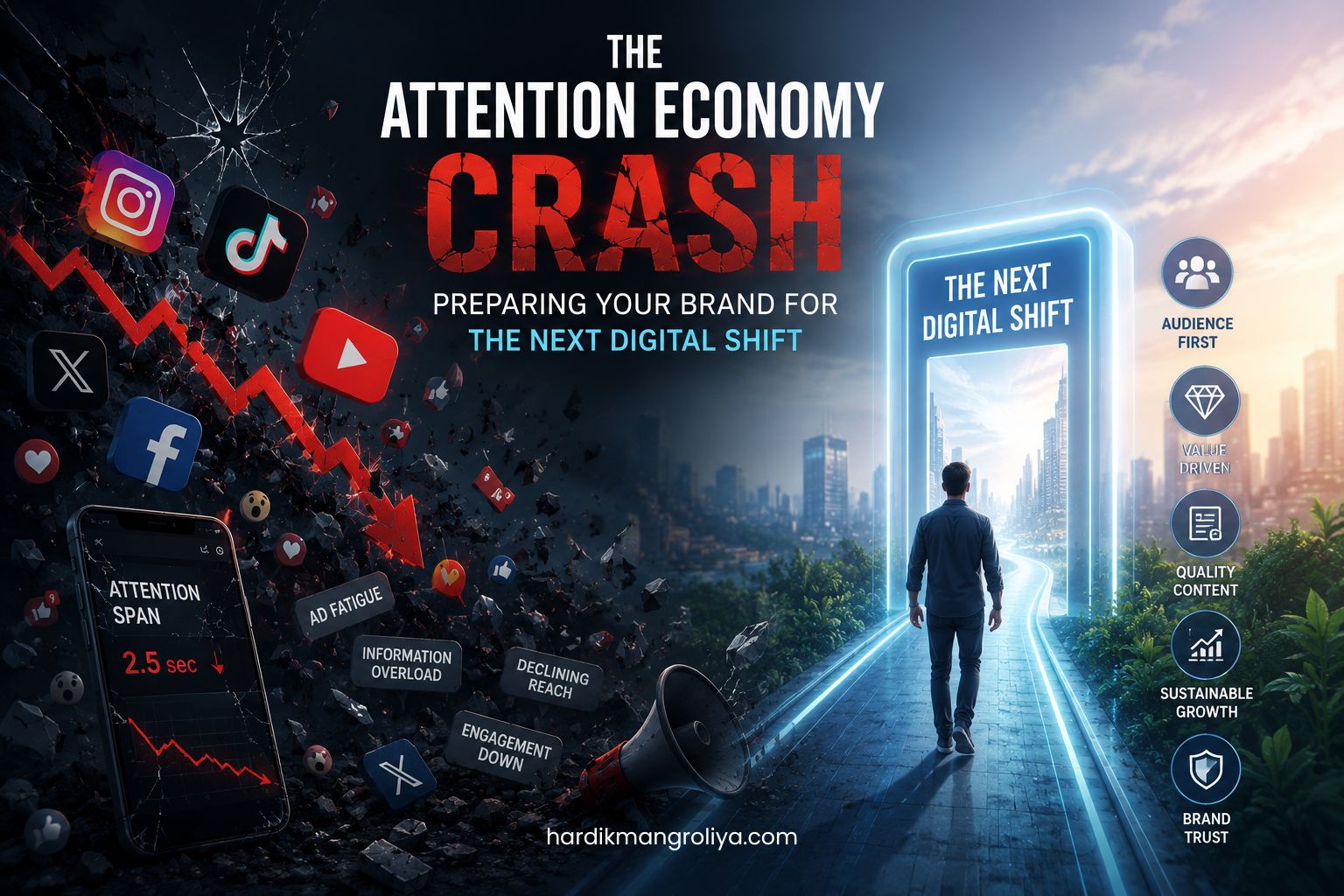
This shift is what we can call the Attention Economy Crash.
It is not a financial crisis. It is a digital reality where content is growing faster than people’s ability to consume it. As a result, attention is becoming one of the most valuable and limited resources in modern marketing.
What Is the Attention Economy?
1. Content Is No Longer Rare
A decade ago, creating high-quality content required significant time, money, and expertise.
Today, almost anyone can create blogs, videos, graphics, and social media posts within minutes.
This is great for accessibility, but it also creates a major problem.
When everyone can create content, content itself loses its uniqueness.
The internet is becoming crowded with similar messages, repeated ideas, and recycled information.
Standing out is becoming more difficult than creating content.
2. People Have Reached Information Saturation
Consumers are constantly surrounded by information.
Notifications, emails, advertisements, podcasts, reels, shorts, and articles compete for their time every day.
Eventually, people become selective.
Instead of consuming everything, they ignore most things.
This means businesses are no longer competing against direct competitors alone. They are competing against every piece of content a consumer sees throughout the day.
Attention fatigue is becoming a real challenge.
3. Algorithms Are Becoming Less Predictable
Many businesses depend heavily on social media platforms for visibility.
The problem is simple.
Algorithms change.
What works today may stop working tomorrow.
A brand that relies entirely on algorithm-driven reach can lose visibility overnight without changing anything about its content.
This creates uncertainty and makes long-term growth harder to control.
The Hidden Problem Most Brands Ignore
While these numbers look impressive, they don’t always translate into trust or revenue. A post can go viral and be forgotten within hours.
A video can generate thousands of views without creating a single loyal customer. The real challenge is not attracting attention. The real challenge is becoming memorable.
Many businesses still celebrate vanity metrics.
In the future, businesses that focus only on visibility may struggle, while businesses that focus on trust and relationships will have a stronger foundation.
What the Next Digital Shift Looks Like
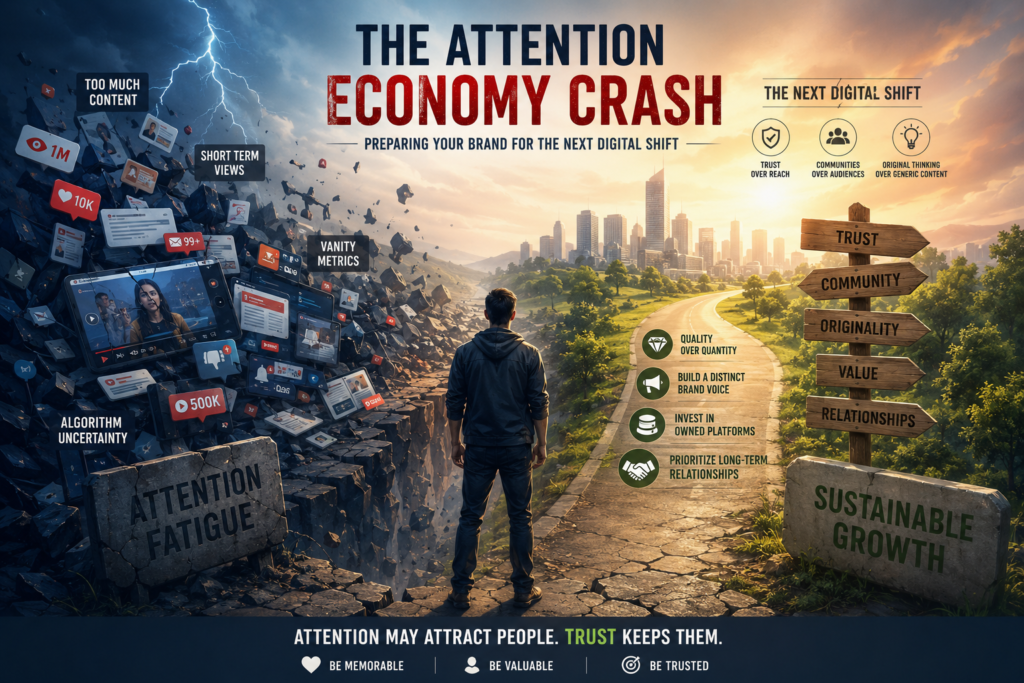
The next era of marketing will be different. Success will no longer belong to the brands creating the highest volume of content. It will belong to the brands creating the highest value. Several important changes are already happening.
Trust Will Become More Valuable Than Reach
People are becoming more skeptical online.
They can easily identify generic content and exaggerated marketing claims.
As a result, trust is becoming one of the strongest competitive advantages a business can have.
Consumers are more likely to buy from brands they believe in than brands they simply recognize.
Communities Will Matter More Than Audiences
An audience watches.
A community participates.
The brands that thrive in the future will build deeper relationships with their customers through conversations, shared values, and meaningful engagement.
People want connection, not just content.
Original Thinking Will Outperform Generic Content
The internet already has enough information. What it needs is perspective. Businesses that share unique experiences, original insights, and fresh ideas will stand out far more than those repeating trends everyone has already seen. Originality will become a premium asset.
How Brands Can Prepare for the Next Digital Shift
Focus on Quality Instead of Quantity
Publishing more content should never be the goal.
Creating useful content should be.
One valuable article that solves a real problem can create more impact than twenty average posts.
The future belongs to content people save, share, and remember.
Build a Distinct Brand Voice
Many brands sound identical online.
The same advice. The same trends. The same phrases.
To stand out, businesses need a clear voice and a unique point of view.
People remember brands with personality.
Invest in Owned Platforms
Social media is important, but it should not be the only growth strategy.
Brands should also build assets they control, including:
1. Email newsletters
2. Websites
3. Private communities
4. Customer databases
Owned platforms provide stability even when algorithms change.
Prioritize Long-Term Relationships
The strongest brands are not built through one viral post.
They are built through consistent value over time.
Every interaction should strengthen trust and deepen customer relationships.
Attention may attract people.
Trust keeps them.
Conclusion
The Attention Economy Crash is not a warning about the end of digital marketing.
It is a warning about the end of easy attention.
As content continues to grow, attention will become harder to earn and easier to lose. Businesses that rely solely on volume may struggle to stand out in an increasingly crowded digital environment.
The brands that succeed in the next digital shift will focus on something more important than visibility.
They will focus on trust.
They will focus on value.
And most importantly, they will focus on creating experiences worth paying attention to.
In a world where everyone is trying to be seen, the brands that truly understand their audience will be the ones that are remembered.
FAQs
1. What is the Attention Economy?
ANS: The Attention Economy is a system where human attention is treated as a valuable resource. Businesses, creators, and platforms compete to capture and keep people’s attention online.
What does the Attention Economy Crash mean?
It refers to a situation where content is growing faster than people’s ability to consume it, making attention harder to earn and maintain.
Why is attention becoming more valuable?
Because people have limited time, while the amount of content available online continues to increase every day.
How does AI contribute to the Attention Economy Crash?
AI makes content creation easier and faster, which increases the volume of content online and intensifies competition for attention.
What is more important in the future: reach or trust?
Trust is likely to become the stronger advantage because consumers increasingly choose brands they believe in rather than brands they simply see often.
How can businesses prepare for the next digital shift?
Businesses can prepare by creating high-quality content, building direct relationships with customers, investing in owned platforms, and developing a unique brand identity.